


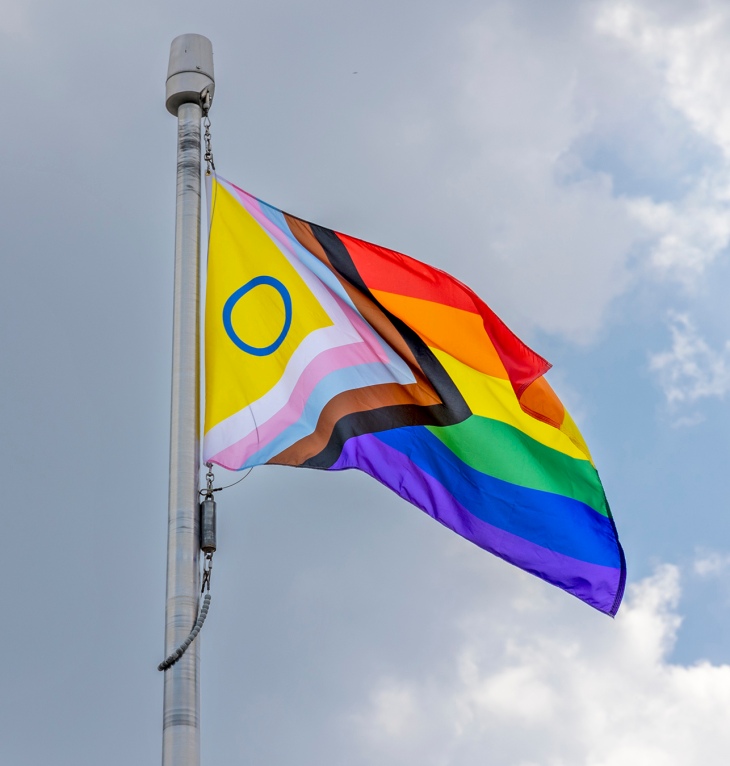
It was a rainless day, but a rainbow still appeared over Edward Hines Jr. VA Hospital.
For the first time, the hospital raised a rainbow Pride flag during a ceremony on June 1 to commemorate Pride Month and recognize the contributions of LGBTQ+ Veterans, staff and community members.
“Hines flies this flag with immense pride today not merely as a gesture, but as a vivid testament to the inclusive environment we have cultivated within these walls,” said James Doelling, hospital director.
The flag will remain outside the hospital’s main entrance throughout June side-by-side with military service flags.
“I think it’s a step forward for acceptance of one another,” said Army Veteran Brandon Chong, Chicago chapter president of the American Veterans for Equal Rights. “A lot of people think of Veterans and they think of straight people. But we are here and we are queer.”
Original flags created by Veterans
The original rainbow Pride flag was created by Army Veteran Gilbert Baker in 1978. Navy Veteran Monica Helms designed the transgender Pride flag in 1999.
In 2022, VA Secretary Denis McDonough authorized Pride flags to be flown at VA facilities nationwide. The U.S. General Services Administration, which maintains over 8,600 federal government locations, also updated its commemorative flag policy to allow for Pride flags throughout June.
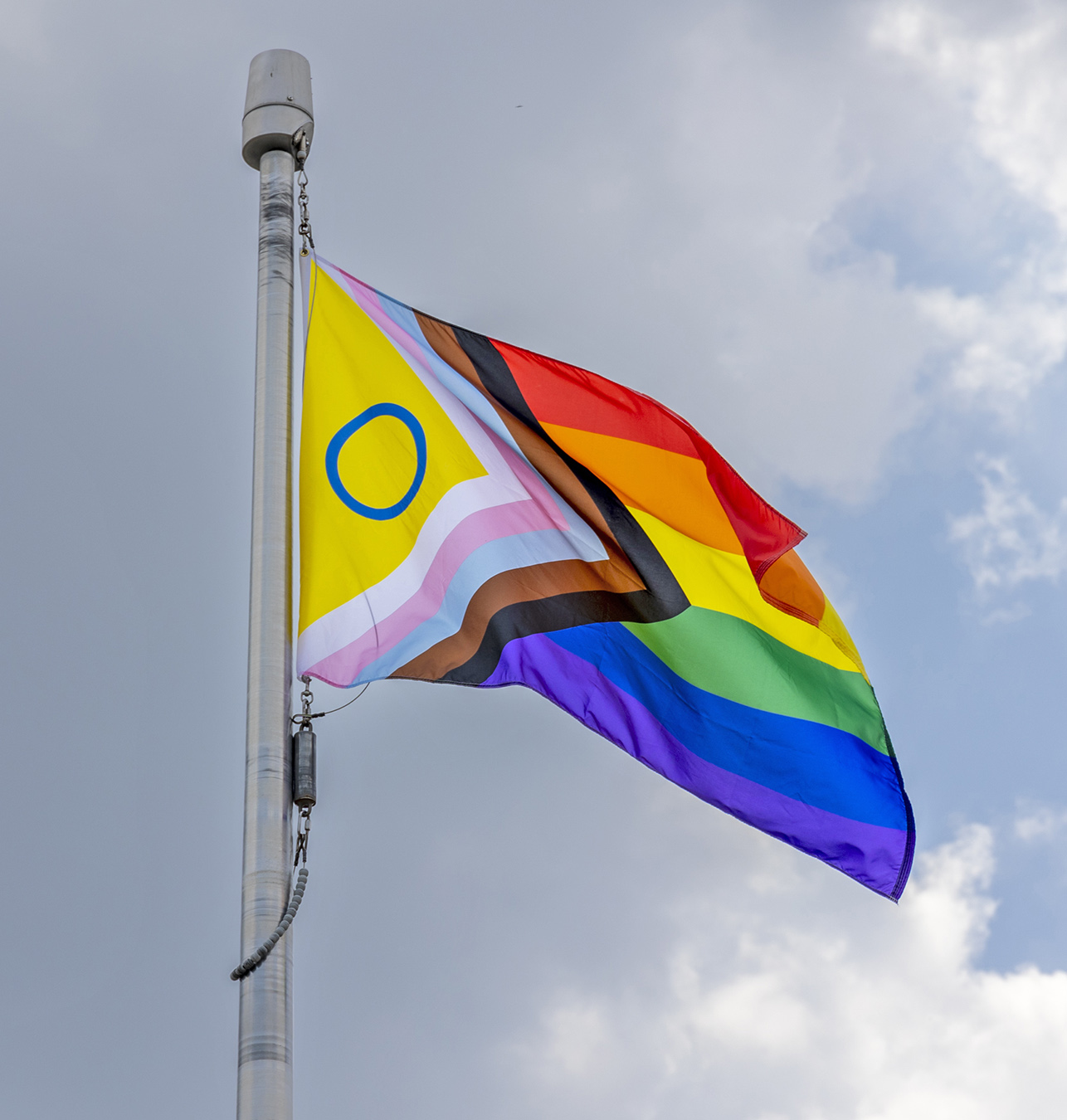
While there are many Pride flags, Hines VA chose to fly the intersex-progress Pride flag. The design includes the traditional rainbow pattern along with white, pink, blue, black and brown triangular stripes to promote transgender and racial equity. A circle is displayed for intersex individuals according to Lorry Luscri, LGBTQ+ Veteran care coordinator.
For 84-year-old Army National Guard Veteran Larry Simpson, seeing a Pride flag at Hines VA was an important moment. “Having the flag next to the service flags is something special because we served, but we mostly served in silence.” Simpson realized he was gay while in the military. At the time, homosexuals were not allowed to serve, so Simpson decided not to reenlist. “There was a question I knew I couldn’t answer truthfully which was ‘Do you have a sexual attraction to a member of the same sex?’ I didn’t want to lie, so I chose to leave.”
“Able to symbolize the whole of the Veteran population that we serve.”
Simpson’s story is not unique according to Chong. “There were a lot of instances where people were kicked out of the military or hunted down by leadership or chose not to stay in because of who they were,” Chong said.
Luscri noted Hines VA has a long tradition of supporting LGBTQ+ Veterans and staff. The hospital began one of VA’s first LGBTQ+ support groups in 2014. It also offers hormone therapy, gender-affirming communication treatment, gender-affirming prosthetics and other LGBTQ+-focused Veteran health care.
“I got a little emotional seeing it go up for the first time. Because we haven’t been able to fly it outside and have it with the other flags and be able to symbolize the whole of the Veteran population that we serve,” Luscri said.
To learn more about VA LGBTQ+ Veteran support and programs, visit www.PatientCare.va.gov/LGBT.