GRAND FORCE AIR FORCE BASE, N.D. (AFNS) —
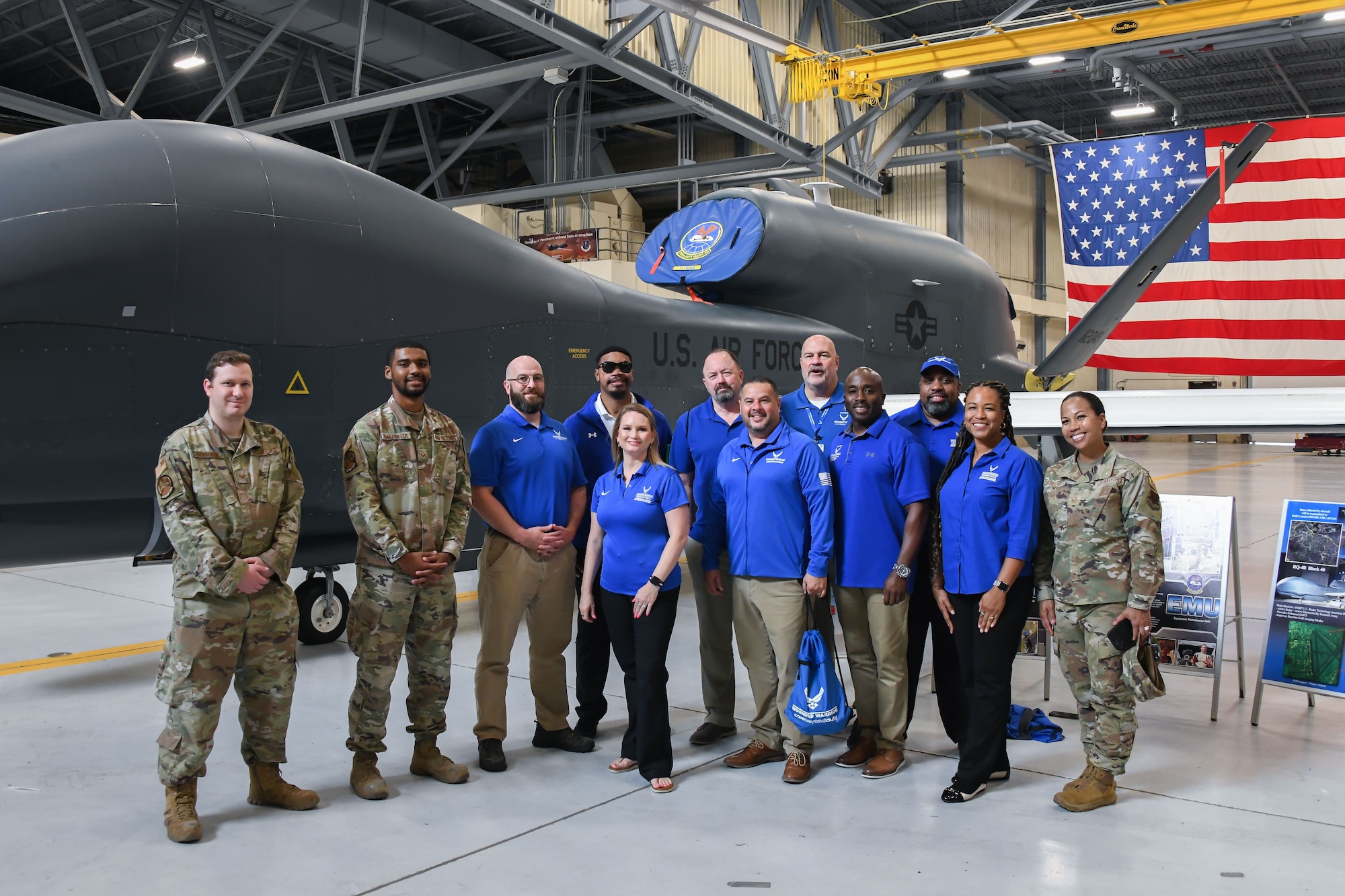
The Air Force Wounded Warrior roadshow visited Grand Forks Air Force Base Aug. 24 to Aug. 25.
AFW2 is a congressionally mandated, federally funded program that provides personalized care, services and advocacy to eligible Airmen, Guardians and their families during and after their service. The mission of AFW2 is to facilitate a smooth transition back to service or civilian life for injured, ill and wounded personnel.
During the two-day visit, four AFW2 ambassadors and program team members gave briefings to various squadrons, allowing the volunteers to share their personal testimonies.
“The Air Force Wounded Warrior Program is for the Air Force, by the Air Force. to take care of our most seriously wounded, ill and injured warriors,” said Ron Johnson, the AFW2 program lead at Joint Base San Antonio-Randolph, Texas.
Retired Tech. Sgt. Bernice Ortiz, an AFW2 ambassador, shared her story of how AFW2 impacted her transition during a briefing with the 319th Medical Group.
Ortiz served as a medical administrator, responsible for many behind-the-scenes operations of medical treatment facilities to ensure doctors, nurses and medics have what they need to treat patients.
She expressed the healthcare services management career field wasn’t her first choice when enlisting, but when she was called to deploy with only four days’ notice, she hit the ground running.
While serving in a medical bay in Afghanistan, she came face-to-face with many distressing scenes.
“When trauma was called, everyone dropped what they were doing and rushed to the trauma bay, so that’s exactly what I did too,” Ortiz said. “I didn’t know that we treated local nationals; there was a three-year-old little boy on a table burned from head to toe.”
Despite the physical, mental and emotional stress Ortiz and her wingmen endured, the strength of the children they treated helped keep them resilient.
“I went with it anyways because the kids over there, they made our deployments,” Ortiz said. “They gave us light to keep going, and every day we’d go to the ward to see them, just to know how they were doing.”
About a month before redeployment, Ortiz fell sick and was returned to home station early. She lamented she wanted to remain in Afghanistan to be close to her teammates who became her support network.
“I started to self-medicate when I got home to push through all the negative feelings,” Ortiz said. “I convinced myself if I just worked really hard and did it for them, I could get through it on my own.”
Peer and social support, a key domain under the spectrum of resilience, is considered a protective factor from self-harm and suicide. Following her return home, Ortiz was missing the peer support network she built during her deployment.
According to the American Psychological Association, veterans are 1.5 times more likely to die by suicide than civilian adults.
“Every day when I would commute to work and come home, I would pull into my garage and hit the garage door button – shutting my car off after that,” Ortiz said. “One day I hit that garage door button and I hesitated. I thought that I could just go to sleep, and it would be so peaceful. Then I saw my baby boy in the car seat in the back and that’s when I knew I had to get help.”
Ortiz began a six-week treatment, eventually came before a Medical Evaluation Board and was returned to duty for another four years. She hopes more service members will push through invisible barriers, understand asking for help is a good thing and promote a positive culture of help-seeking.
Ortiz said she later experienced sexual harassment that triggered another downward spiral. Pulling from her previous experience, she sought treatment, this time before her struggle turned to a crisis.
“I decided that after this next MEB, I would be done with serving in the Air Force. I didn’t fight it, I got out and I took my care seriously,” Ortiz said.
Following her final MEB, she was introduced to AFW2. Although hesitant at first, not considering herself a wounded warrior, Ortiz recalled her biggest regret was not seeking the program out sooner.
“I was able to find the love and support and comradery that I was missing all this time,” Ortiz said. “It gave me the courage to have my voice again and to realize that I’m not alone. Refer yourself, refer your friends – the wounded warrior program will never leave you hanging.”
The Department of the Air Force defines ‘wounded warrior’ as any seriously wounded, ill or injured member who requires a MEB or Physical Examination Board to determine fitness for duty. All Airmen and Guardians who think they may qualify for the program are encouraged to inquire.