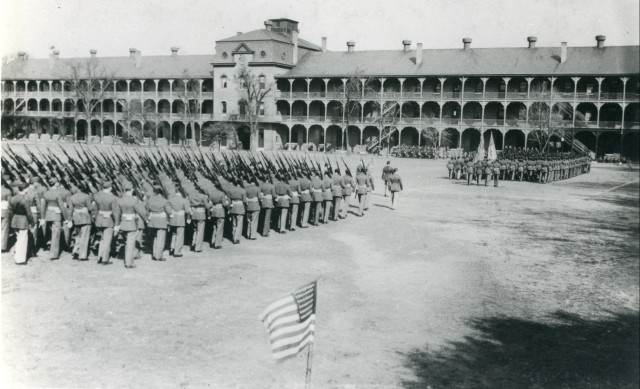
On July 1, 1973, U.S. Army Training and Doctrine Command was activated at a ceremony at Fort Monroe, Va.
VIEW ORIGINAL

The U.S. Army Training and Doctrine Command Military History and Heritage Office preserves the historical record of the command. Fifty-five linear feet of historical archives from Operation STEADFAST and the old U.S. Army Combat Developments Command, shown, constitute a copy of ‘TRADOC’s Birth Certificate’.
VIEW ORIGINAL
U.S. Army Training and Doctrine Command’s 50th anniversary is July 1, 2023. In celebration, the TRADOC Communication Directorate in collaboration with the TRADOC Military History and Heritage Office, is sharing an article series highlighting key moments in TRADOC’s history to include the evolution of training, AirLand Battle, and gender integration. This is part one.
On a warm and rainy Sunday, July 1, 1973, right by the Chesapeake Bay’s Hampton Roads and just outside the stone walls of old Fort Monroe in Virginia, the Army established the U.S. Army Training and Doctrine Command under its first commander, Lt. Gen. William E. DePuy. As the 50th anniversary approaches, the question arises, why did the Army establish TRADOC?
To answer that question requires a look, decades back, into the Army’s history. During and after World War II, the Army conducted several institutional reorganizations looking for balance in the continental U.S. between maintaining readiness among active duty and reserve units, and conducting their training and education functions. Institutional manifestations of that ongoing effort were the wartime General Headquarters, U.S. Army and the Army Ground Forces as well as the post-war Office of the Chief of Army Field Forces. And then in 1955, yet another Army reorganization recombined almost all the service’s U.S.-based activities into the Continental Army Command, which continued throughout American involvement in the Vietnam War and demonstrated, again, the cumbersomeness of too much institutional responsibility and mission activity compressed into only one command.
Restarting in the late 1960s from unfinished reform efforts earlier that decade and continuing through U.S. military withdrawal from Vietnam in spring 1973, still another Army reorganization began. This time, the endeavor finally produced significant results by trying to resolve CONARC’s overlarge organizational and mission span of control by, once more, looking for institutional balance between U.S.-based units’ readiness, and their training and education functions. That effort, eventually called Operation STEADFAST, culminated on July 1, 1973, with the Army’s disestablishment of CONARC. From its constituent parts TRADOC and the U.S. Army Forces Command were established. Simultaneously, the Army disestablished the Combat Developments Command and incorporated its mission into the newly established TRADOC.

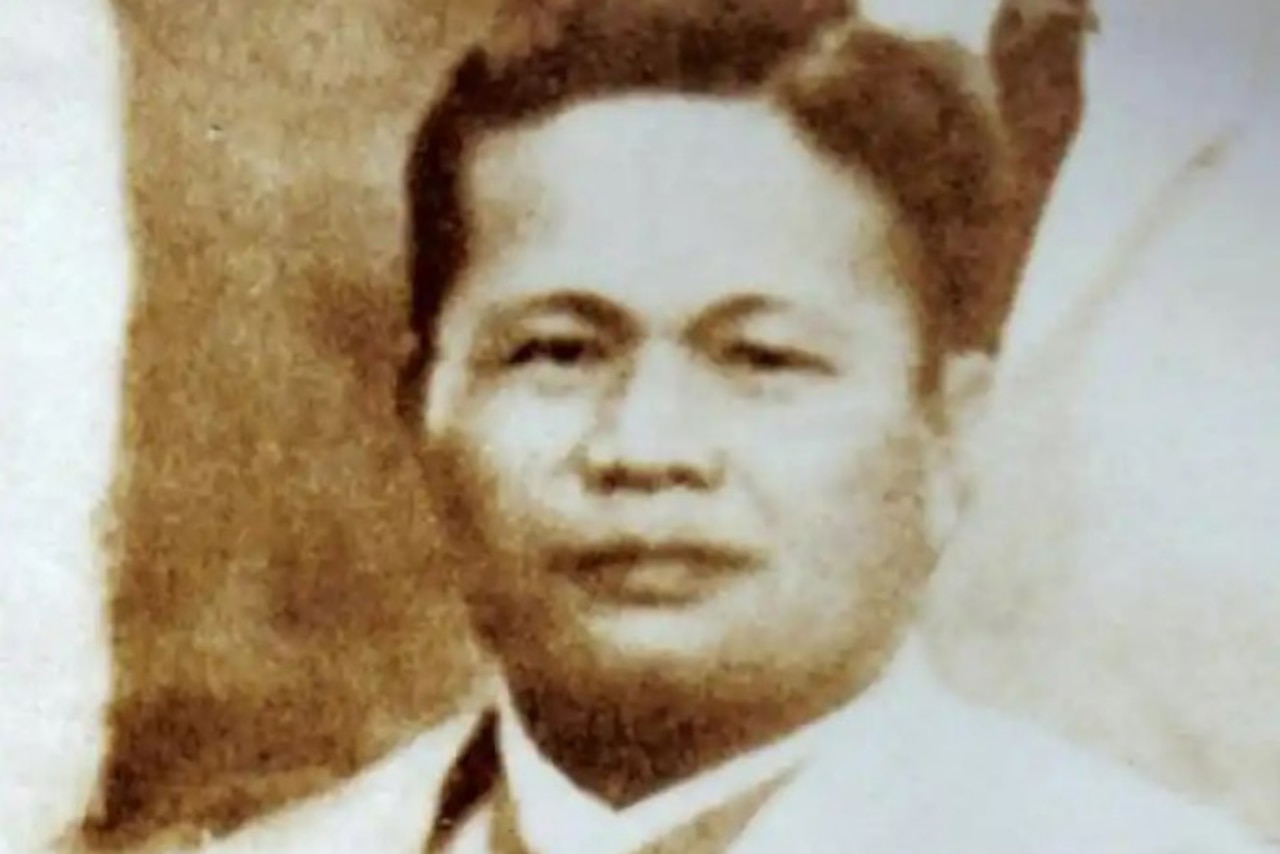
Lt. Gen. William E. DePuy, first commanding general of U.S. Army Training and Doctrine Command, speaks at the command’s activation ceremony July 1, 1973, at Fort Monroe, Va.
VIEW ORIGINAL
Since then, FORSCOM has handled active duty and reserve units and their collective training to be ready for war, while TRADOC has accessed the Army’s Soldiers and their leaders into the service; individually trained and educated both groups; formulated the doctrine by which they fight; designed the units in which they serve; and, until the 2018 establishment of the U.S. Army Futures Command, developed the requirements for the equipment all Soldiers use to achieve their tactical and operational missions. Before the 2006 full establishment of the U.S. Army Installation Management Command, TRADOC also operated the Army’s posts, camps, and stations on which it performed the command’s duties.
Over the years since its completion in 1834, Fort Monroe, VA, had become one of the Army’s principal installations, along the way witnessing the birth of the service’s school system in 1824 with the establishment there of the Artillery School of Practice. Fort Monroe had also been home to several of TRADOC’s predecessor commands, including CONARC.
After all the details, why then a TRADOC? In compressed form, the answer has been to give the one Army command to take a new Soldier or leader from first handshake to first unit of assignment and beyond, and to provide them with the training, education, doctrine, units, and (until recently) equipment requirements with which to fulfill the Army’s part of providing the country’s general-purpose land force to the overall joint forces’ effort to win the nation’s wars when called upon to do so.
For more information about TRADOC, visit https://www.tradoc.army.mil/.